In-Rack L2A Coolant Distribution Units
Density is outpacing what air alone can cool, and a full liquid cooling buildout isn't always the next step you're ready to take. Gradian’s L2A CDUs let you add liquid cooling rack by rack, matching capacity to actual load instead of committing to room-scale infrastructure up front.
6 – 24 kW Cooling Capacity
Fits Standard 19" Rack Footprint
No Facility Water Loop Required
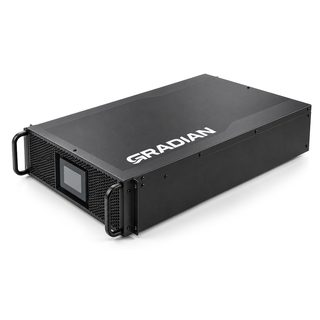
Key Features
Built In Redundancy
1+1 redundancy across fans, pumps, and power keeps cooling running through component faults or routine service, with no interruption to the rack.
Compact High-Density Cooling
Delivers cooling capacity up to 24 kW from a compact chassis that fits a standard 19" rack footprint, freeing the white-space floor area a standalone CDU would otherwise consume.
PLC-Driven Monitoring and Control
PLC control with a 7" HMI touchscreen and integrated temperature, flow, pressure, leakage, and humidity sensing, with a three-level alarm to locate faults fast.
Technical specifications
| Rated Cooling Capacity | 6 kW @ ΔT=15°C |
|---|---|
| Coolant (Secondary Side) | Pure water |
| Secondary Flow | 0.36 m³/h |
| Pump Configuration | Dual pump, frequency conversion |
| Control Modes | Constant pressure diff. / flow / temp |
| Height | 177mm (4U) |
|---|---|
| Width | 481mm |
| Depth | 982mm |
| External Interface | 1" clamp |
| Power Supply | 2× 1P 220V, 50/60Hz |
|---|---|
| Communication | 2× RS485, 2× RJ45 |
| Protocol | Modbus RTU / TCP-IP |
Specifications shown reflect our standard configuration. Capacity, materials, and features can be adjusted to your specific application.
Scale At Your Pace
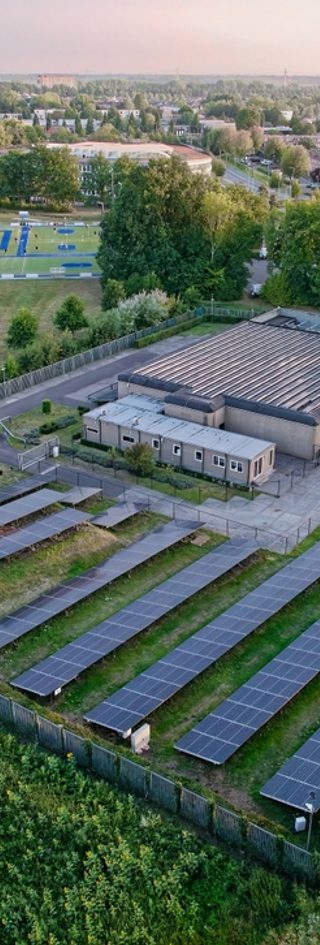
A facility-wide liquid cooling retrofit is a major capital decision, and not one you should have to make just to cool one high-density rack. Reject heat straight to the air inside the rack, add liquid cooling rack-by-rack as the deployment grows, and match capacity to actual load instead of committing to room-scale infrastructure before you need it.
Air-Side Heat Rejection - Reject heat directly to the surrounding air, no facility water loop or cooling tower required.
Rack-by-Rack Scalability - Add liquid cooling capacity one rack at a time as density increases, rather than sizing for the whole room upfront.
Lower Upfront Infrastructure Cost - Avoid the plumbing, pumps, and piping a facility-wide liquid loop would require.

Fitted To Your Facility
Retrofitting liquid cooling shouldn't mean redesigning your entire rack and manifold infrastructure. Clamp-type connections drop into existing setups, supporting both pure water and water-based antifreeze. A CDU that adapts to your coolant strategy—not the other way around.
Clamp-Type Connections - Install and service without specialized plumbing tools or a facility shutdown.
Existing Manifold Compatibility - Integrate into current rack and manifold infrastructure instead of requiring a redesign.
Multi-Coolant Support - Run on pure water, DI-water, or water-based antifreeze such as PG25, matched to your site's requirements.

Gain Total Visibility
A cooling problem you don't see coming is the one that actually costs you. Integrated PLC controls monitor critical system parameters in real time, while variable-speed pumps adjust coolant flow to match server load—so the system responds to changing conditions before they become a rack-level incident.
Real-Time System Monitoring - Track temperature, flow, pressure, and leakage conditions at the rack, not after the fact.
Load-Responsive Flow Control - Variable-speed pump control adjusts system flow to match actual server demand instead of running at a fixed rate.
Built-In Redundancy - 1+1 pump architecture and redundant power and communication interfaces (on supported models) keep cooling running through a single component fault.
Questions, answered.
An L2A (Liquid-to-Air) Coolant Distribution Unit circulates liquid coolant through liquid-cooled IT equipment and rejects captured heat to the surrounding air. Unlike liquid-to-liquid CDUs, an L2A CDU does not require a facility water loop, making it a practical option for rack-level liquid cooling deployments.