In-Rack L2L Coolant Distribution Units
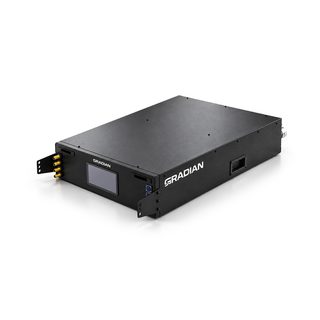
High-density compute doesn't wait for room-scale infrastructure to catch up. Gradian's In-Rack L2L CDUs bring liquid-to-liquid cooling directly to the rack, with high-capacity cooling across standard 19" and OCP ORV3 configurations.
Up to 200 kW Cooling Capacity
Standard 19" & OCP ORV3 Compatible
Dual-Pump (1+1) Redundancy
Compact In-Rack Chassis
What Makes a Gradian L2L In-Rack CDU?
Redundant Dual-Pump Control
Dual-pump (1 duty + 1 standby) alternating design keeps racks cooled through a pump, power, or filter fault, with online maintenance so units are swapped without stopping cooling. A three-level alarm mechanism lets operators locate abnormalities fast.
High-Density Cooling in a Rack Slot
Delivers rated capacity across the lineup in a compact in-rack chassis, freeing white-space floor area that a standalone CDU would otherwise consume. Adapts to standard 19" server rack, 4U height.
Integrated Monitoring and Standard Connectivity
Single-chip microcomputer control with built-in temperature, flow, pressure, leakage, and humidity monitoring, communicating over RS485 and FE via Modbus RTU and SNMP for direct integration into DCIM/BMS.
Technical specifications
| Rated Cooling Capacity | 80 kW |
|---|---|
| Primary Fluid Flow | 6.0 m³/h (26.4 GPM) |
| Secondary Fluid Flow | 6.0 m³/h (26.4 GPM) |
| Primary / Secondary Medium | PG25 / DI Water |
| Approach Temperature | 15°C |
| Pump Configuration | Dual pump, VFD (1+1) |
| Rack Type | OCP ORV3 |
|---|---|
| Envelope (W×D×H) | 546×949×166.5mm |
| Pipe Connection | 1.5" clamp |
| Power Supply | DC48V busbar |
|---|---|
| Controls/Comm | RS485, FE |
| Protocol | Modbus RTU, SNMP |
Specifications shown reflect our standard configuration. Capacity, materials, and features can be adjusted to your specific application.

Scale At Your Pace
Room-scale liquid cooling infrastructure is a commitment. One shouldn't have to make on day one. Add liquid cooling as your deployment grows. Rack-by-rack capacities up to 200 kW lets you match cooling to actual load, instead of committing to infrastructure you don't need yet.
Rack-by-Rack Deployment - Add liquid cooling capacity one rack at a time as density increases.
Up to 200 kW Per Unit - Cover a wide range of load requirements without moving to a larger system.
Match Capacity to Actual Load - Size cooling to what's deployed today, not a room-scale forecast.

Built In Peace of Mind
A cooling issue you don't catch in time is the one that costs you. Reduce operational complexity and give operations teams real-time visibility and complete peace of mind — gain total control over critical liquid-cooling conditions from the rack and connected management systems.
Temperature, Flow & Leak Monitoring - View critical cooling conditions in real time.
Modbus & SNMP Connectivity - Integrate CDU data into DCIM and BMS platforms.
Centralized Visibility - Monitor cooling infrastructure from a single interface.

Made for the Racks You're Already Running
Whether you're running standard 19" infrastructure or OCP ORV3, this CDU drops into what you've already built. Clamp-type primary and secondary connections and busbar power integrate with existing rack and manifold infrastructure, supporting pure water and water-based antifreeze such as PG25.
OCP ORV3 & Standard 19" Support - Deploy across both rack architectures without switching platforms.
Clamp-Type Connections - Install and service without specialized plumbing tools.
Multi-Coolant Support - Run on DI water or water-based antifreeze such as PG25, matched to your site's requirements.
Questions, answered
An in-rack L2L CDU is a coolant distribution unit that installs inside a server rack, transferring heat between a facility water loop (primary side) and a technology cooling loop (secondary side) to keep IT equipment within safe operating temperatures.