Liquid-Cooled Load Banks for Commissioning & Validation
Prove it before you power up. Gradian liquid load banks simulate the thermal, hydraulic, and electrical demands of high-density IT equipment, helping commissioning teams validate cooling performance before valuable AI and GPU infrastructure ever touches the loop.
20 kW – 1.4 MW Capacity Range
In-Rack to Facility-Scale Form Factors
True-to-Production Heat Rejection & Pressure Drop
Manual or Networked Multi-Unit Control
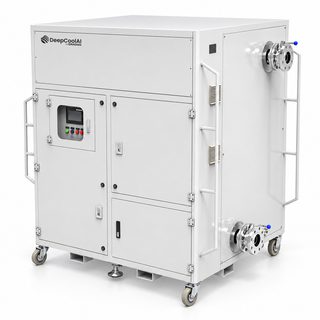
What Makes a Gradian Liquid-Cooled Load Bank?
Simulate Full-Scale IT Loads
Apply controlled resistive loads that recreate the heat generation and power demand expected from production IT equipment. Available liquid-cooled load bank configurations span 20 kW to 1.4 MW.
True-to-Production Liquid Circuit
High-pressure liquid circuits with flange connections and manual balancing valves reproduce the coolant pressure drop and heat rejection of real production hardware, not an approximation of it.
Full Monitoring and Flexible Control
PLC control with a touchscreen HMI and integrated monitoring of temperature, flow, pressure, leakage, and liquid level. Run manually or networked across multiple units via Ethernet or Wi-Fi (Modbus TCP).
Technical specifications
Form Factors
Every deployment needs a different footprint to test in. Gradian’s Air-Cooled Load Banks scale across three form factors, each matched to how and where you're actually testing.

In-Rack
Installs directly into a standard 19" rack to simulate a single server's heat rejection, power draw, and coolant pressure drop — compact and self-contained.
•20 kW (3U) – 30 kW (4U)
•AC or DC voltage options
•Built-in HMI for real-time monitoring

Cabinet / Row
A compact, self-contained unit for room-level, multi-rack, or full AI rack simulation — including rack-form models built to match the liquid-cooling connections of a modern AI GPU rack.
•100 kW – 300 kW
•Vera Rubin NVL72 Simulation
•HMI touchscreen with real-time data display

Facility
Floor-standing units for row- or facility-scale commissioning, built for megawatt-class heat loads.
•500 kW – 1.4 MW
•IP44-rated, forklift pockets, quick-connect flanges
•PLC control with 10" touchscreen

Prove It Before You Power Up
Millions of dollars in AI hardware shouldn't be the first thing to find out your liquid-cooling loop doesn't work. Simulate real heat rejection, power draw, and coolant pressure drop before a single piece of live IT equipment connects to the loop.
True Heat Rejection Simulation - Reproduce the actual thermal load a live server would generate.
Pre-Deployment Validation - Test CDUs and manifolds before they're carrying production hardware.
20 kW to 1.4 MW Range - Validate at rack scale or facility scale on the same platform.

Validate the Full Hydraulic Picture
Whether your facility can reject a given amount of heat is only half the question. A high-pressure liquid circuit with flange connections and a manual balancing valve lets you confirm flow rate, pressure drop, and branch balance.
SUS304 High-Pressure Circuit - Built to hold up under the flow and pressure a real liquid-cooling loop runs at.
Manual Balancing Valve - Adjust and verify flow balance at the fluid outlet.
Integrated Pressure & Flow Monitoring - Confirm hydraulic performance in real time, not just after the fact.
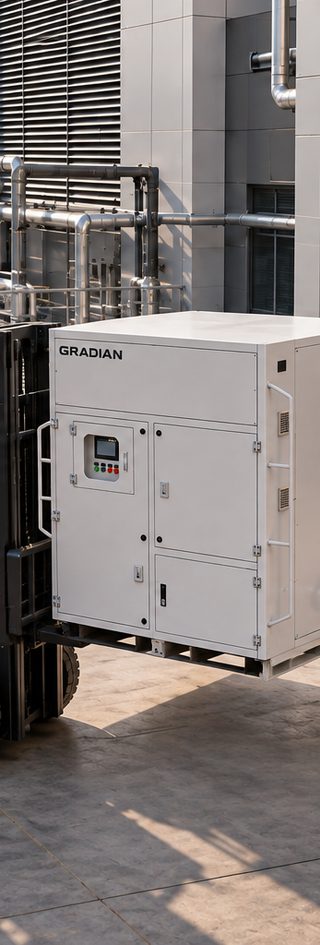
Made to Move, Built to Last
Heavy test equipment that's a hassle to move becomes a burden on all those involved. IP-rated cabinets with forklift pockets, casters, and quick-connect flanges deploy fast and seal reliably, so positioning the unit isn't its own project.
Forklift Pockets & Casters - Move into position without specialized rigging.
Quick-Connect Flanges - Connect the liquid circuit without a lengthy plumbing process.
IP-Rated Cabinets - Built to hold up to the environment it's deployed in.
Questions, answered.
A liquid-cooled load bank applies a controlled electrical load and rejects the heat into a coolant loop, so teams can commission liquid-cooling infrastructure — CDUs, manifolds, and pumps — and verify pressure drop and power before live servers are installed.

Let’s Validate Your Liquid Cooling Loop
Talk to an engineer about capacity, form factor, and facility-scale testing for your deployment.